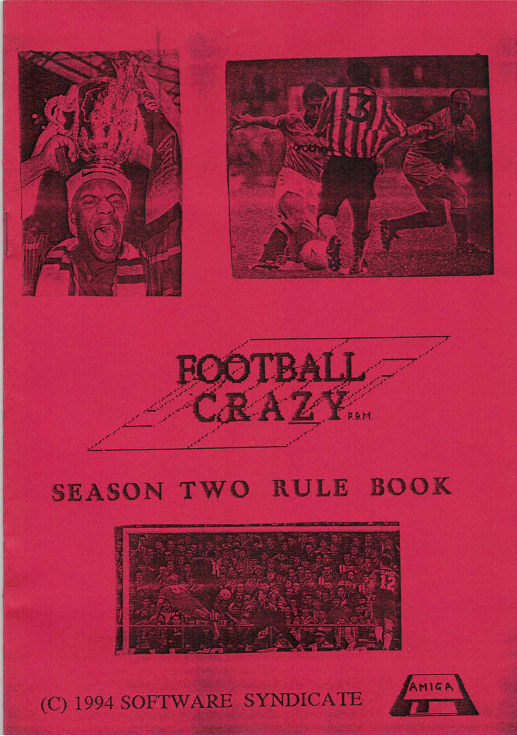
Football Crazy & ESoccerClub
This page documents a non-profit football management simulation project created and operated during the 1990s. It is preserved as part of a personal technical archive and shared at the request of former participants.
Football Crazy (1993–1998)

Football Crazy was a multi-division football management Play-By-Mail game devised and operated between 1993 and 1998. Managers from across the UK ran their clubs by submitting weekly team sheets and tactical instructions via post, and later by email. Each game week was processed using a custom-built application running on a Commodore Amiga A1200.
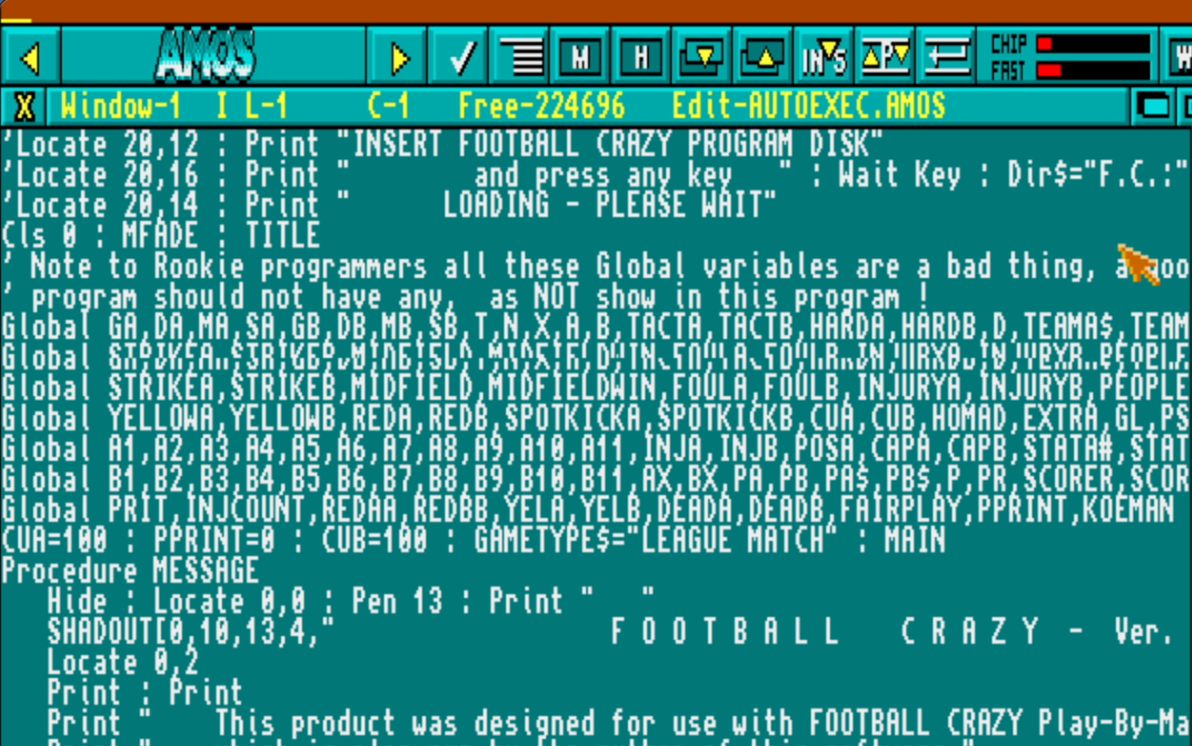
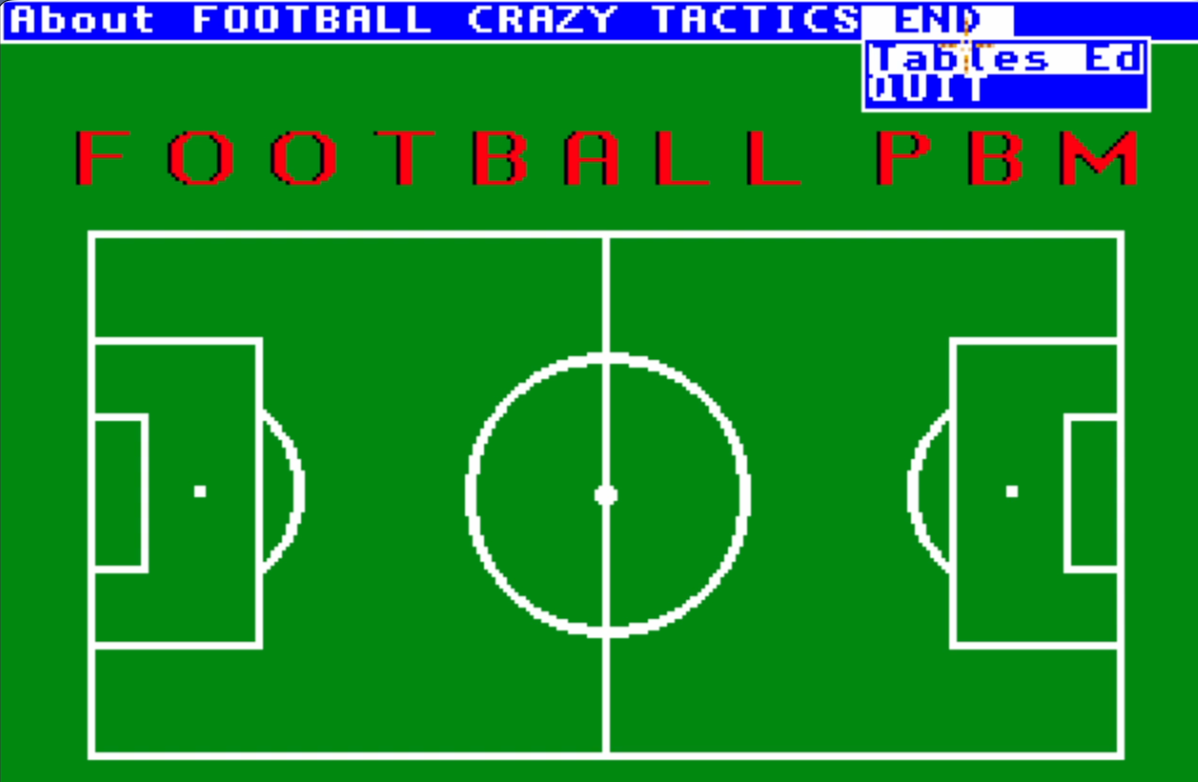
The Football Crazy application was written in AMOS and comprised more than 100,000 lines of code. It functioned as a complete simulation engine.
The system:
• Simulated football matches
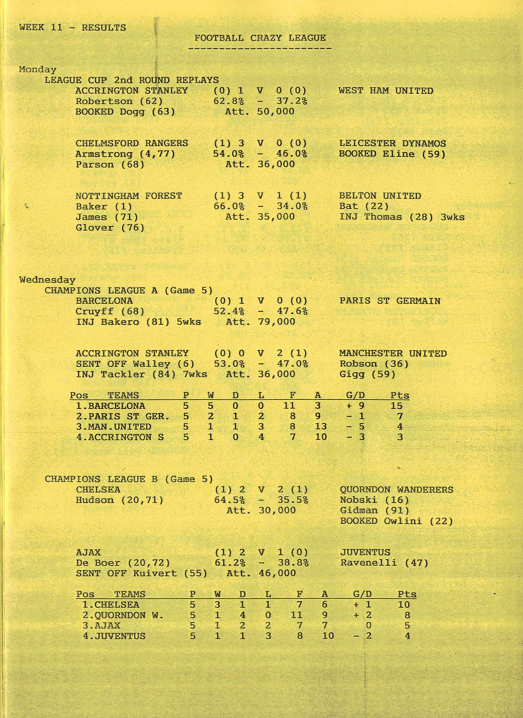
Generated detailed match reports
• Managed up to 100 football clubs, with up to 60 player-managed sides and computer managed sides
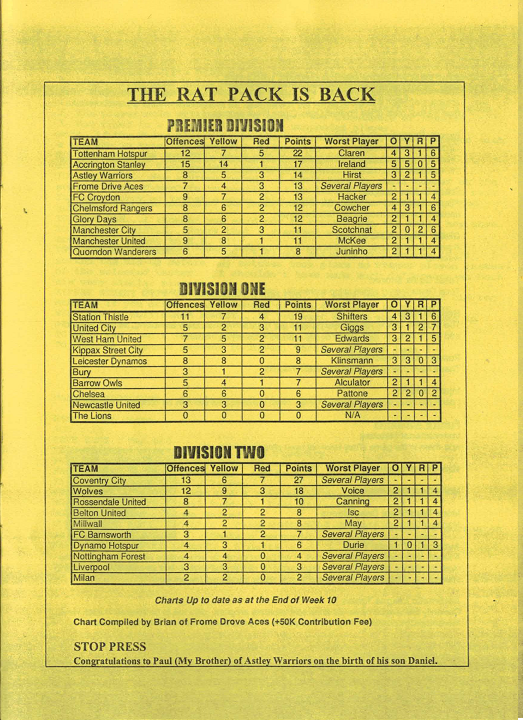
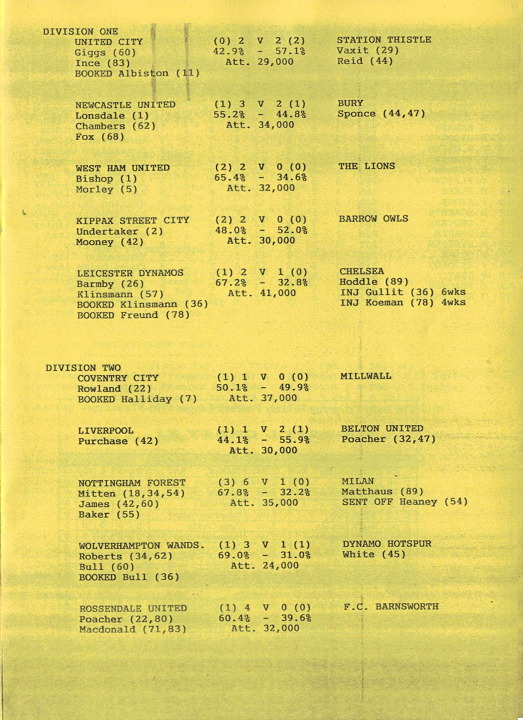
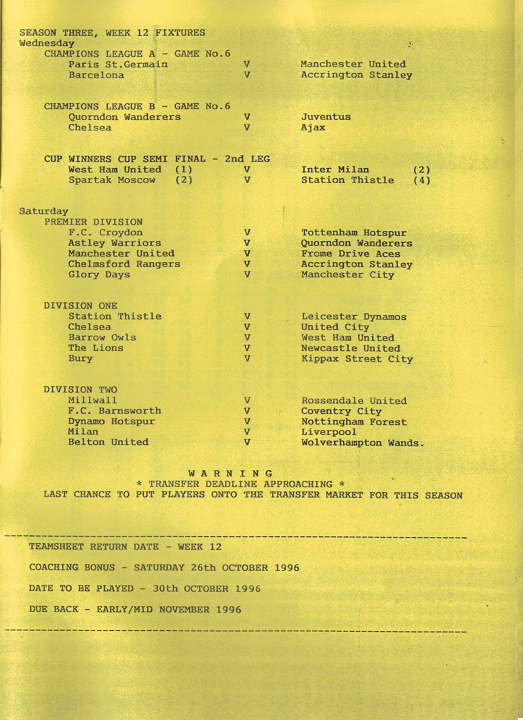
• Maintained league tables and cup competitions
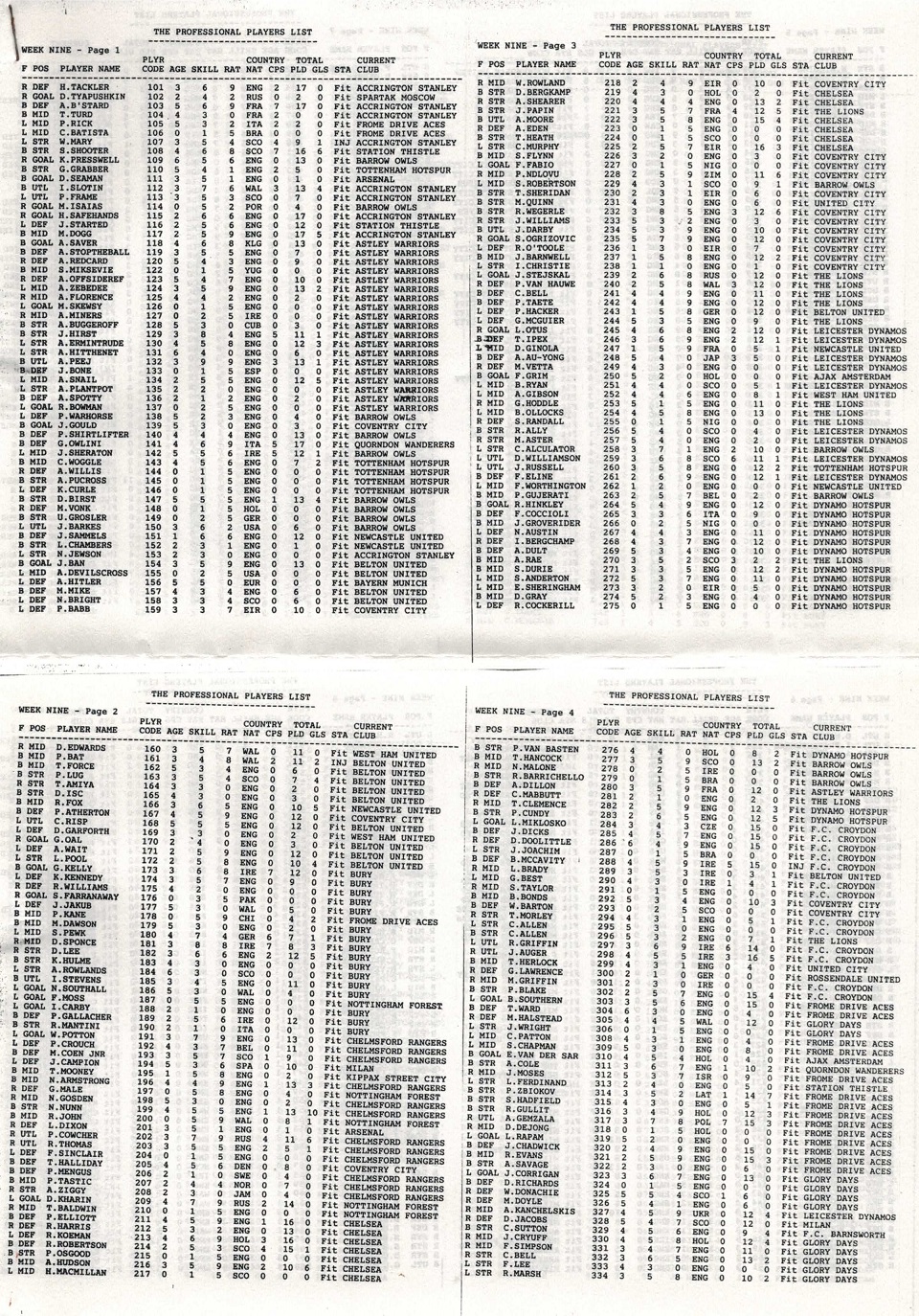
• Operated a structured transfer market
• Managed player fitness, injuries, suspensions, and development
• Calculated club finances including wages, gate receipts, overdrafts, and loans
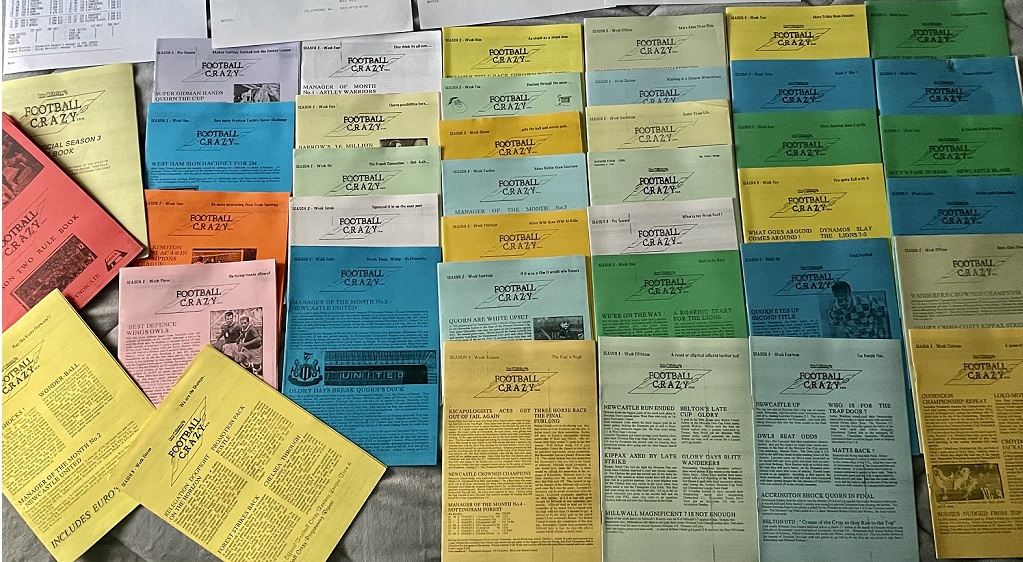
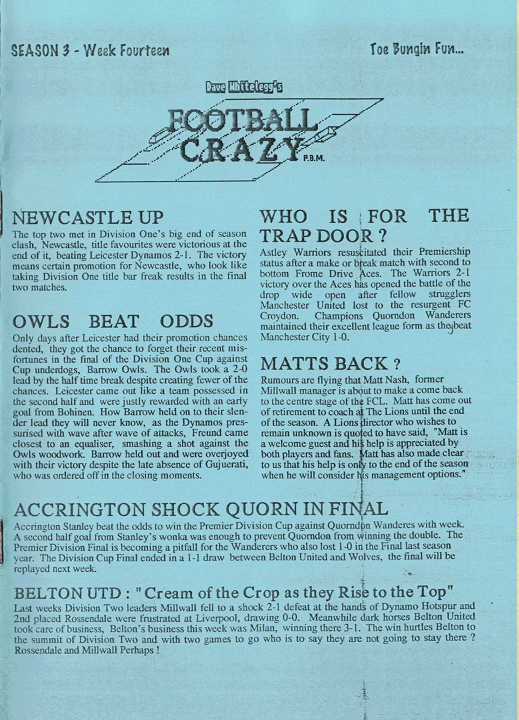
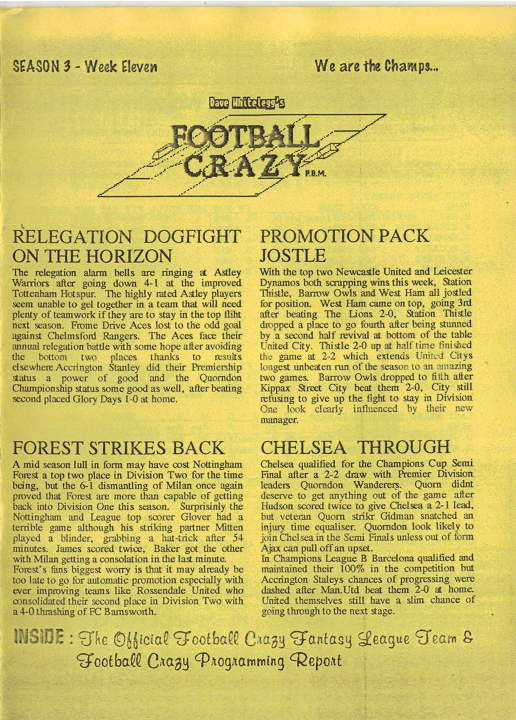
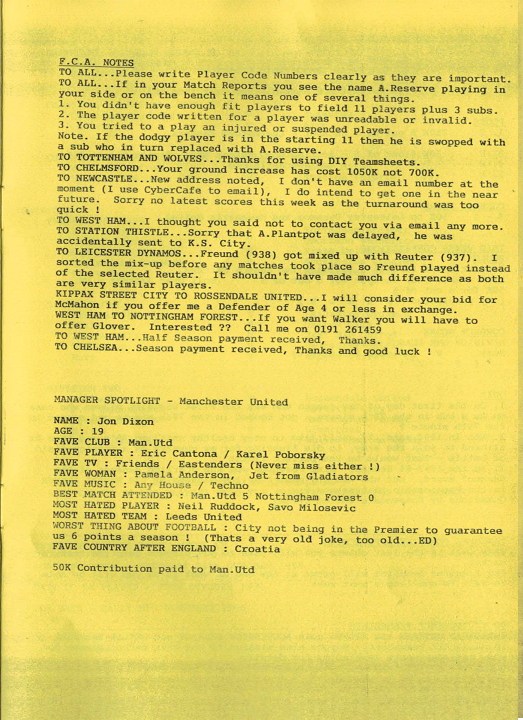
• Produced a weekly printed newsletter
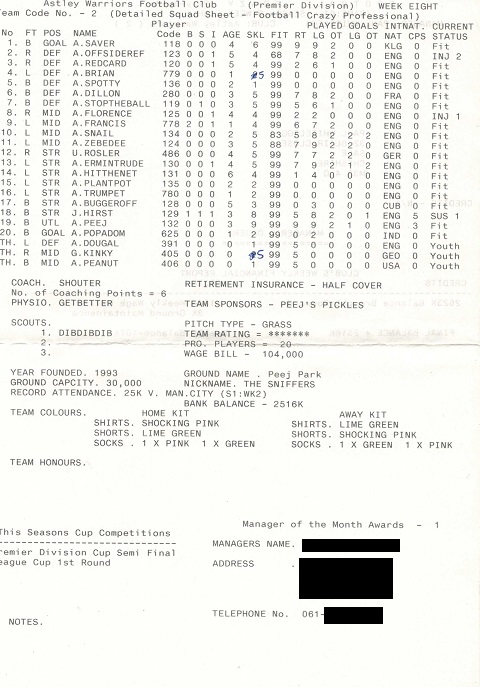
Managers received printed match reports, squad sheets, league tables, and competition updates, along with structured forms to submit tactics, transfers, training adjustments, staff decisions, ticket pricing, and stadium development.
All submissions were processed through a rule-driven engine operating on a fixed weekly cycle with deadlines.
Simulated Match Processing
Matches were fully automated and rule-driven.
Each manager submitted team selections, tactical instructions, and club management decisions via printed teamsheet forms by post in advance of weekly deadlines. The submitted data was then entered into the Football Crazy application and processed by the game engine.
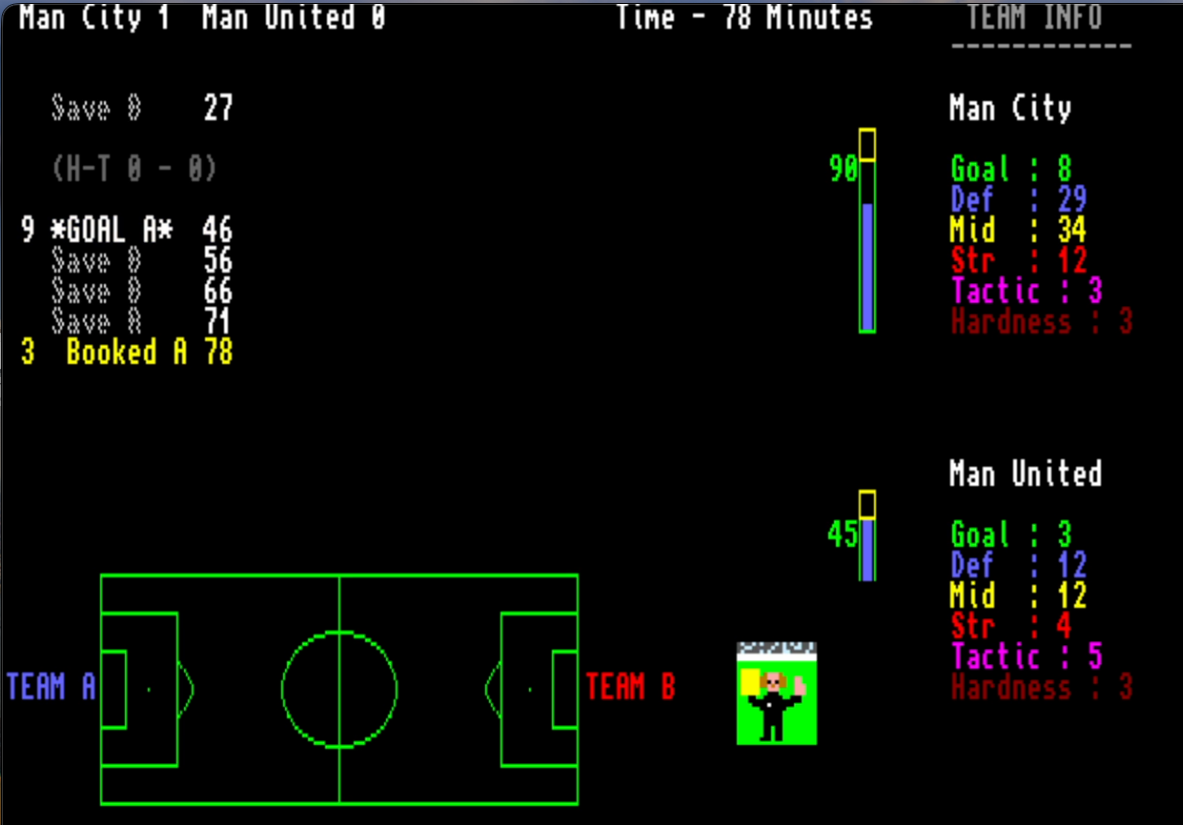
Once processing began, fixtures could be viewed live on screen by attending managers and, on occasion, followed remotely over the phone. The application generated simulated crowd noise, including home and away goal reactions, boos for yellow and red cards, and simple commentary for key match events.
The engine calculated match events, player performance, momentum shifts, and tactical outcomes in real time, producing a detailed simulation based entirely on pre-submitted managerial decisions.
The screenshot below shows a test fixture being processed live within the Football Crazy engine.
Printed Match Report – Posted to Managers
Following each fixture, a detailed printed match report was generated and posted to the participating managers.
The report included:
• Team line-ups, formations and tactical settings
• Chronological match events, includig goals, substitutions and key incidents
• Match statistics and performance indicators
These reports formed the feedback loop of the game, enabling managers to analyse performance and adjust strategy for the following week.

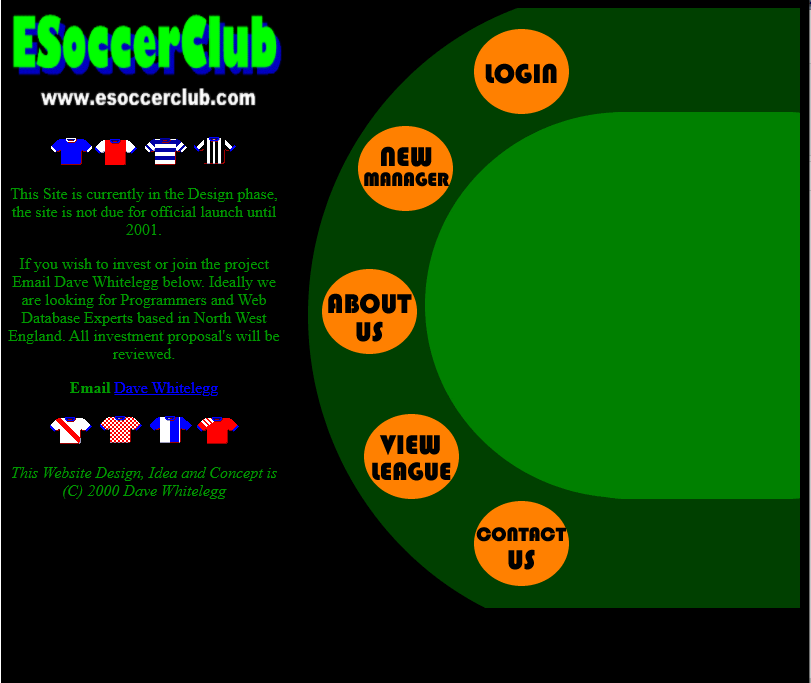
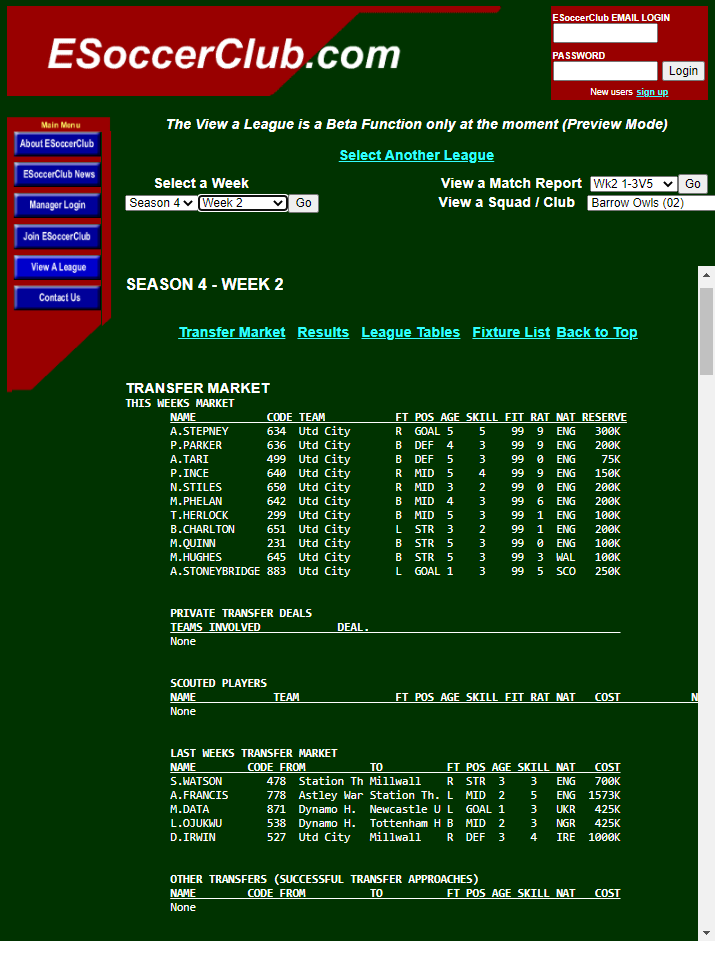
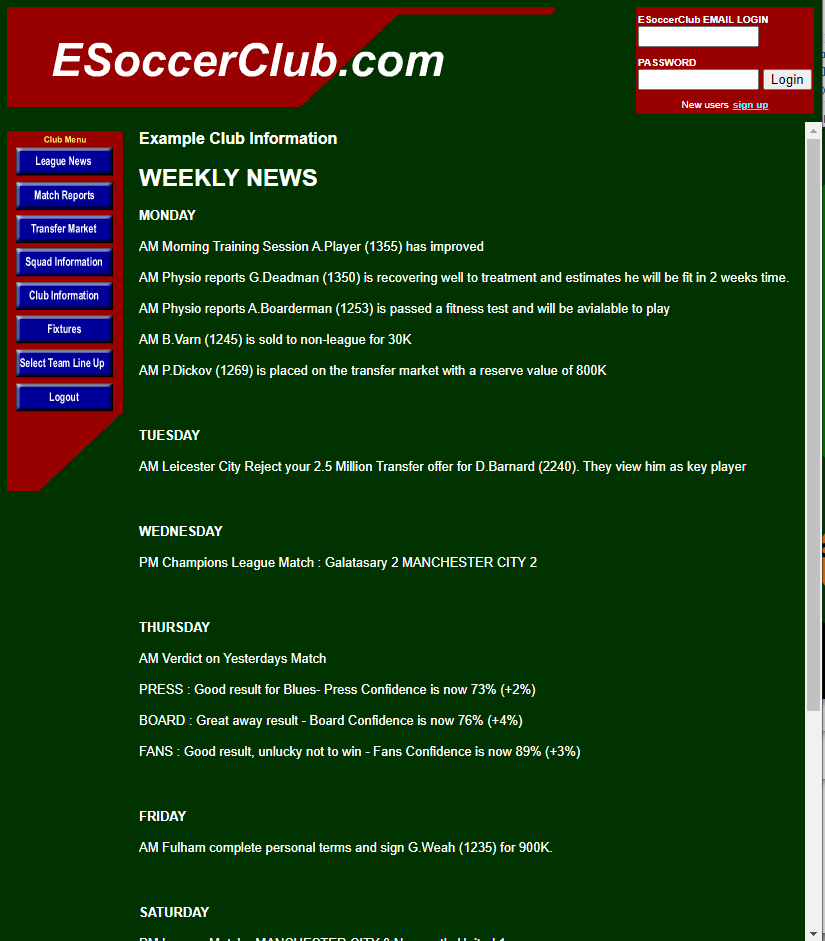
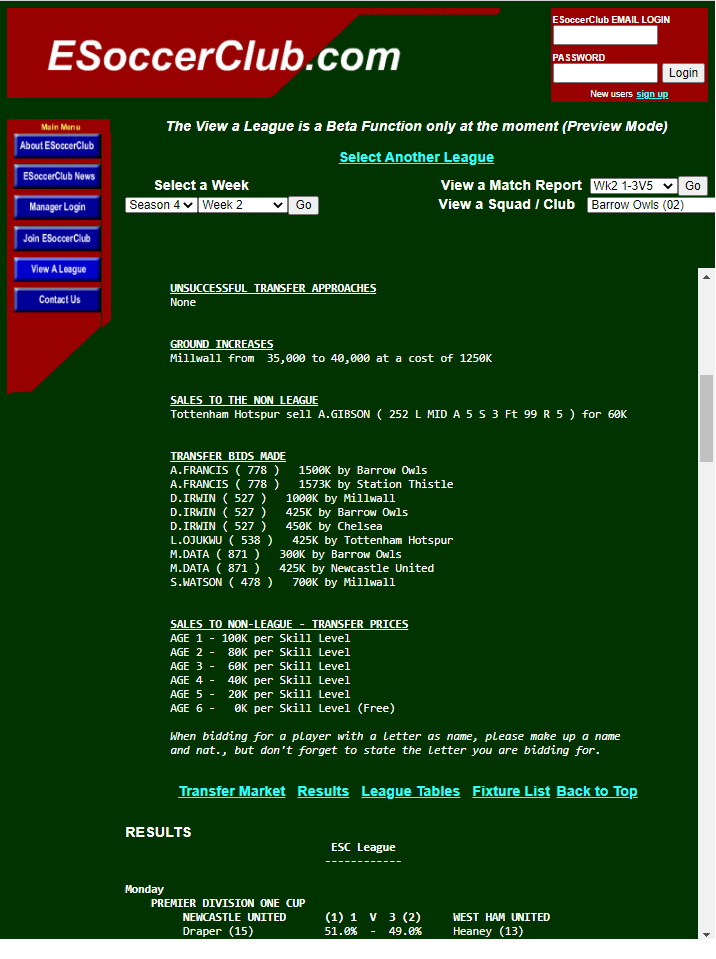
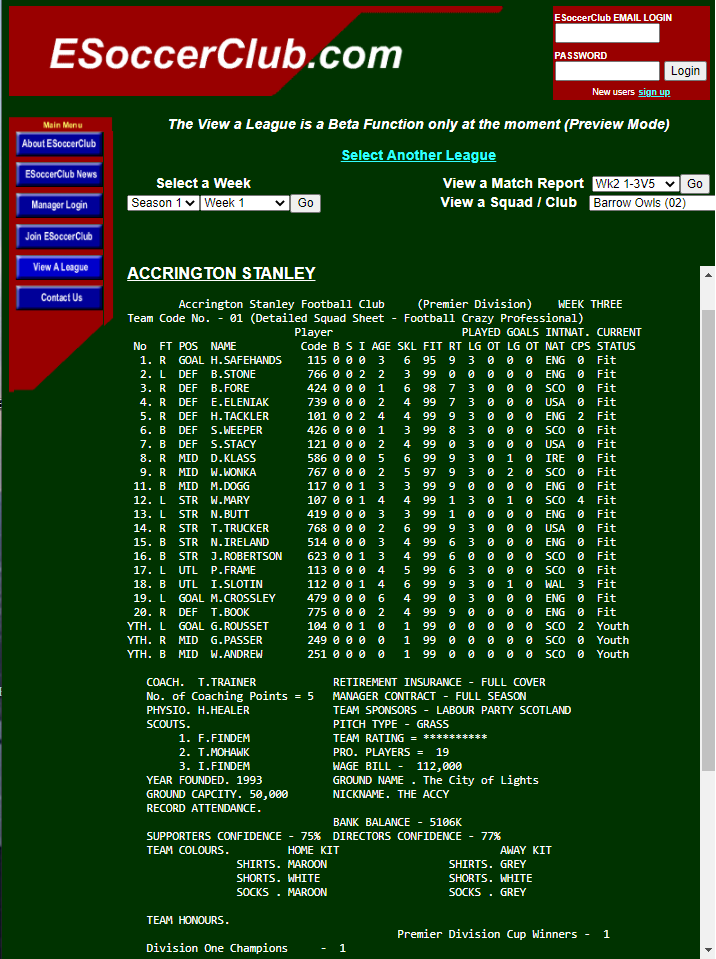
In 2000, development began on an online evolution of the game called ESoccerClub.
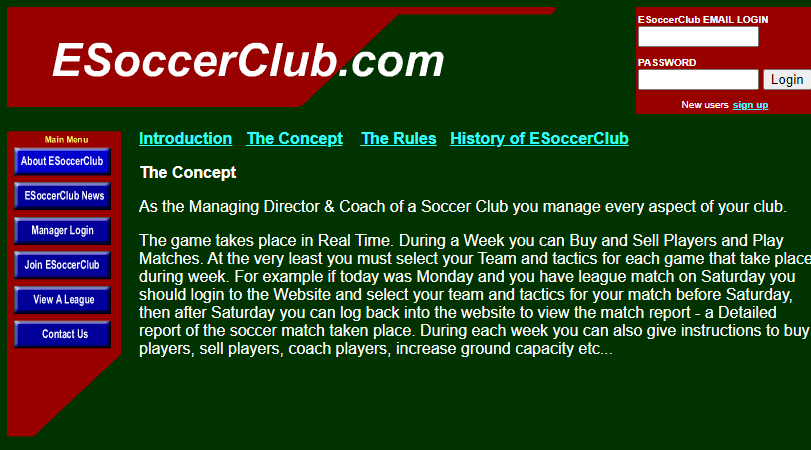
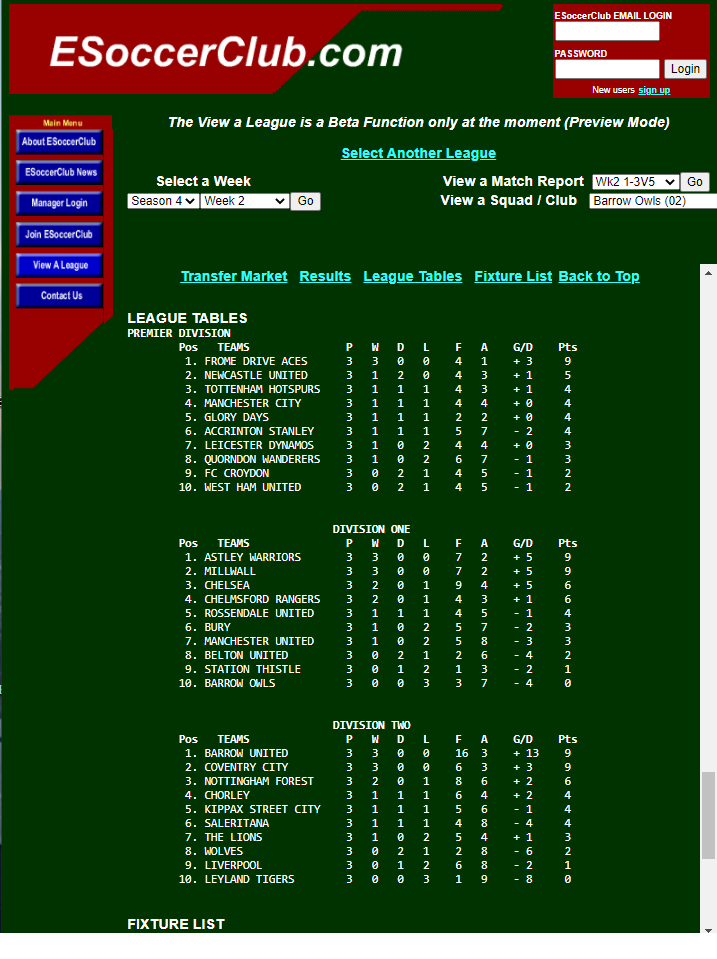
The intention was to transition the Play-By-Mail format into a browser-based platform allowing managers to log in and manage clubs online. A functional concept web application was developed.
However, internet hosting infrastructure and player adoption at the time were limited, and the project was not commercially launched. Development ceased as professional commitments shifted.
ESoccerClub WebApp
Development eventually ceased as other professional commitments took priority.
*** A Big Thank You to every player who took part in playing Football Crazy over the years and contributed to building a unique and enjoyable football management simulation experience ***
Archive Material
The archive includes original newsletters, match reports, squad sheets, rule documents, trophy photographs, and early ESoccerClub concept screenshots.
These materials are preserved as historical documentation of the project.